
Detection of blind ore bodies by crosshole acoustic raying
Tested between 1970 and 1990 at tens of USSR deposits, including Kochbulak, Uzudmurt and Karamken
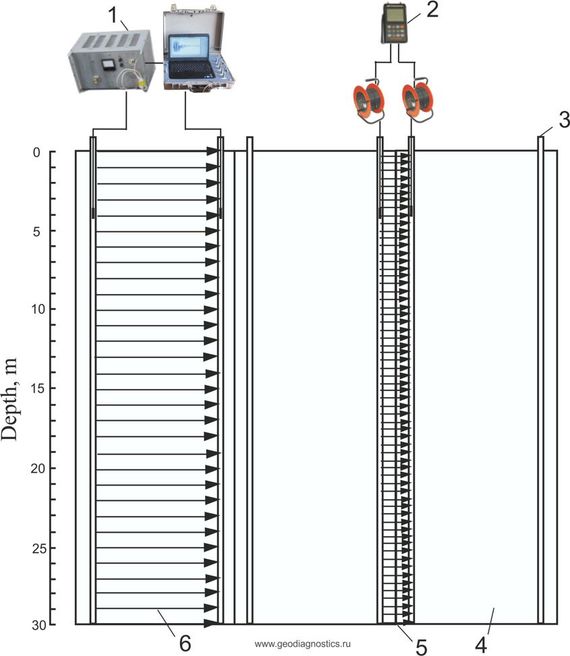
The technology of searching for ore bodies in crossholes by means of acoustic raying was tested between 1970 and 1990 at tens of USSR deposits, including the deposits of Kochbulak (Uzbekistan), Uzudmurt (Kazakhstan) and Karamken (Russia).
Use of acoustic raying provides detection of ore bodies in crossholes and in the underground space. That allows the quality and the correctness of the evaluation of mineral resource deposits to be increased, and reduces expenses at the exploration stage, due to the decreased number of exploration bores and excavations.
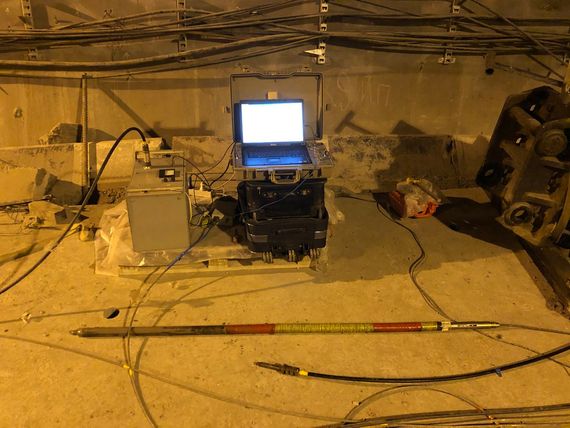
Geological segmentation, detection and edging of blind ore bodies, quartz reefs, fracture zones, karsts, taliks, buried ice and the lower bound of incoherent mass and residual soil are all carried out with the same APZ-1 hardware system. The sounding distance in incoherent soils (sand, sandy clay) is no less than 20 m; in rocky soils (granites) it reaches 150 m.